Todd Grooms avatar

Wendy, Let me Explain Something to You
The Shining

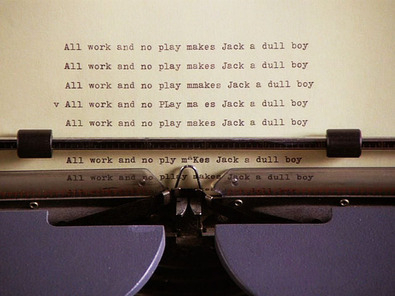
Whenever you come in here and interrupt me, you’re breaking my concentration. You’re distracting me. And it will then take me time to get back to where I was. You understand?

My stepfather was an auto body man. He claims that he found his passion during his high school auto body class. After graduating high school, he spent most of his working life beating the dents out of cars. He spent most of his time working for car dealerships. Car dealerships would routinely purchase wrecked cars and hire auto body men to fix the vehicles so that they could in-turn sell the car for a profit. The dealerships would sometimes be able to make a profit of a few thousand per car.

The work was brutal. He worked year round in a shitty body shop with no air conditioning in the summer and kerosene heaters in the winter. Summer time in Kentucky finds temperatures routinely in the 90s and frequently breaking 100°F. The humidity in Kentucky during the summer is so high that a quick walk from the front door of your house to your car in the driveway would leave a thick layer of perspiration on your forehead at 7AM. The winter in Kentucky, while considered mild compared to the northern United States, can still be frigid.

He worked like a dog: forty to forty-five hard hours a week. He was paid hourly. As far as I can recall, he had no benefits. Sick? You’re missing out on pay. Vacation? You’re missing out on pay. He brought home $225 per week. To help make ends meet, he also freelanced on nights and weekends. There was a small detached garage at our house. He would work from 6PM (when he usually arrived home from work) until 9PM (an early night) or until 12AM (a late night). He would also catch up on his freelance work on Saturdays and rarely on Sundays. He tried to save Sundays for his day of rest, which usually involved watching a Winston Cup race.

He was also fortunate enough to be artistically talented. He could charge big money for a custom paint job, sometimes a couple of thousand, depending on the gig. Luckily, there was no shortage of young men who wanted a custom painted car to show off to their friends. Unfortunately, custom paint jobs eat up time. There are hours devoted to drawing out the initial design. Then there is the taping, which can take an entire night. Once the car is taped, the design needs to be drawn out, followed by intricate X-Acto blade work to cut out the pattern. Now you’re ready to paint. There are always many coats involved. And those take time to dry. Many designs require layers of work. It is not uncommon to repeat this process five to ten times for simple designs. If there are any imperfections or bugs (Kentucky summers are a hotbed for mosquitoes and other flying nuisances) the affected area would have to be wet sanded (sanding the painted surface while squeezing a wet sponge over the area), which would smooth out the surface. After all of this, the body still has to be clear coated to give it that protective layer and to make it shine. If done properly, the car will permanently look wet (which was always desired).

My stepfather claims that this was a labor of love. He felt that he was put on this earth to repair auto bodies and to paint them. I feel he was a bit disingenuous. I think his passion was actually art and that his canvas happened to be cars. I believe he repaired auto bodies as a means to an end, to afford him the chance to run his side business so that he could land the custom paint jobs.


I, on the other hand, feel that I was put on this earth to write software. It brings me joy. I have a job writing software. I should be happy about this. And, usually, I am. The issue is that I would like to do more. I would like to learn more. I would like to work on other projects, my own projects. But what do you do when, after working forty hours a week, you are so mentally drained that you can’t force yourself to work on your own projects?

In a manner of speaking, my stepfather had side projects. His side projects kept food on the table and clothes on our back. His side projects were a necessity. I have the luxury of making a very comfortable living in my day job. My side projects are strictly academic or for self advancement. It’s important to note that my side projects are not intended to draw income (although if they did, I wouldn’t be upset). What I have discovered is that passion alone has failed me in my drive to pursue side projects. When I walk into my house I am mentally drained. I want to spend time with my wife. I want to watch television (lately, I’ve been hammering through episodes of Top Gear, British version of course). I want to recuperate. “What about the weekend?”, you might ask. No dice. I’m still tired. I still want to relax and recuperate. But mostly, I want to enjoy my home. I want to take in what Nashville has to offer.

So where does this leave me? Usually agitated. I become irritable about not working on my side projects. If I do find the time and the drive to actually sit in front of my computer, I have rarely left my project in a place where I can quickly pick it back up. Every time I put down one of my projects, I have failed future Todd. I never leave notes for myself so that I know what was happening or where I should go next. If any distractions arise (even something as innocent as my wife wanting to spend time with me) I meet them with an unusually harsh response. I outwardly blame others for my inability to manage my own side projects. “I wish I had more time,“is a common refrain. But there are plenty of other developers who have side projects and they have the same amount of time as I do during a day. So what makes them different? My guess: Planning and priorities.

I would love to give up on side projects, but in my own mind I would feel like a failure for not having them. It seems as though every developer today has their day job and other projects at night onto which they contribute. If I don’t have a side project, am I less of a developer? Probably not. But it feels that way.
You Wanna Hurt Me?

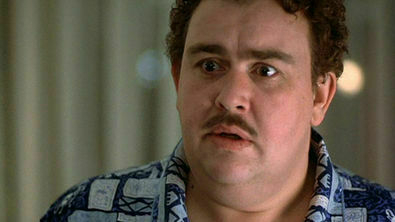
A scene from Planes, Trains and Automobiles where John Candy confronts Steve Martin.

Go right ahead if it makes you feel any better. I’m an easy target.

In the movie Planes, Trains and Automobiles (Oxford comma be damned), Neal blames his ruined trip home on Del. Is Del trying to ruin Neal’s trip? No. Del is just being himself. He’s loud. He’s boisterous. He’s doing what he believes is right. He’s not out to ruin Neal. But Neal, being the cynic that he is, feels that Del is just a buffoon with intentions of malice. I’ve run into a few Dels during projects. And I’ve unfortunately became Neal in many of these situations. It’s not something that I’m proud of, but something that I’m working toward improving.

I recently started working on a project at work that we took in house. The project had been outsourced to a developer in South America, but was brought to use to finish that last 5%. I loathe the last 5%. The reason? It’s never just 5%. Inevitably there are foundation problems with the code. There are quirky little bugs. The application is slow. And the code? Horrific. It’s like you’re renovating a house and you hire me to paint it. I come in and immediately fall through the floor. After I dig myself out of the hole, I see water running down the wall and electrical wires dangling out of the ceiling.

I have a tendency to become bitter at this stage. A little at the project, but most of my bitterness comes at the expense of the developer who wrote the code. It’s easy to blame all of your problems on someone else. I wanted to criticize this developer. I wanted to shame this developer. I wanted to humiliate this developer. Why would I do this? Because I’m God’s gift to programming, of course. I would never make these juvenile mistakes. My code would be pristine. My code would have been well thought out. The application would have been flawless. I even feel that the developer may have even maliciously written terrible code. Maybe the developer was intentionally attempting to sabotage the project. Sometimes I have to catch myself and realize that he or she may just be beginning their journey of being a software developer and that he or she may need a little help along the way.

The issue with my hubris is that I’m forgetting a few truths. I used to be this bad (maybe even worse). I am embarrassed by the code that I wrote while I was in college. I sincerely hope no one ever sees code from the first project that I worked on. In hindsight, it was horrible. How did I overcome this? I was fortunate enough to have developers around me who pushed me and challenged me to become better. They gave me constructive criticism. It was face-to-face. There were no attempts at public shaming. I was lucky to work with developers who genuinely wanted to do good things and help others do good things. I believe this has been lost, somewhat, in the past couple of years at our company and by most developers. It’s easy to be snarky toward others with your first projects safely deleted or hidden on a thumb drive that happens to be buried in a drawer at your desk.

When I become irritated at another developer, I explain to them why I’m irritated. I open a code review on them and try to help them improve at their craft. Am I a saint? No. I sometimes exclaim hurtful comments out loud at my keyboard. I have judged the original developer of my current projects unfairly. I have refrained from attempting to belittle him or her on Twitter. After taking a little time to reflect on the situation, I simply regret that I will not have the opportunity to give them feedback. To help him or her improve at something that they love or at least care enough about to do for money. I realize my code is far from perfect, but I figure that if I can help others improve then others can help me improve.

I occasionally have to fight my urge to become Neal. After Neal has blown up at Del (one of the many times), Del goes on a heartfelt rant with this line: “I could be a cold-hearted cynic like you, but I don’t like to hurt people’s feelings.” Perhaps this world would be a bit better for developers if there were more developers out there who cared less about “burning” a fellow developer and more about helping a fellow developer improve. I’m slowly starting to learn this and make this change within myself.

Jesus, Man, Can you Change the Station?

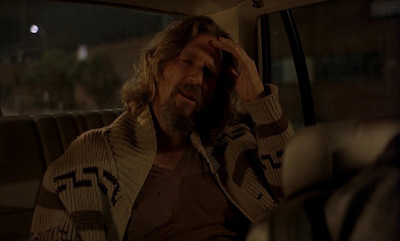
A scene from The Big Lebowski where Jeff Bridges is in the back of a cab, holding his head, asking the driver to change the music.

I’ve had a… had a rough night, and I hate the fucking Eagles, man.

Don’t you just hate it when you’re fast asleep and something wakes you up? It’s irritating. I also have a problem: I have a difficult time falling back to sleep once I’ve been awakened. Do you know what makes it particularly troublesome? When it’s after midnight and you feel like you’re at a god damn Eagles concert because your next door neighbor (separated by 6-8 feet) is listening to Take It Easy at maximum volume. And not just “10 - Max Volume”. We’re talking about, full-blown, Spinal Tap, “These go to eleven” maximum volume.

Irritated yet? Have no fear. I hear the starting notes to Witchy Woman, but he hits the skip button to get to Lyin' Eyes. I’m miserable. The next song I remember hearing is Desperado, followed by Tequila Sunrise. After this, he either turns off the stereo or I black out from either anger or sleep deprivation; I’m not sure which.

I spent my Saturday exhausted. I realize what you’re probably saying: “You’re in bed before midnight on a Friday night? Are you an old person?” Not really. Sure, I turn 28 in a few weeks, but I don’t consider that to be too old. The issue is that I enjoy getting up early and contributing to society (even on weekends). In addition to that, Saturday was a pretty special day as it was our baby shower. Thankfully, my wife was unperturbed and did not wake through Their Greatest Hits 1971-1975. I enjoyed the party, but it was difficult to focus. Fortunately for me, my neighbor rarely has back-to-back performances.

You might be asking why I didn’t knock on his door or why I wouldn’t just call him on the phone and ask him to turn it down (I do have his number, after all). Over a year ago, while he was practicing his drums at 11PM on a Wednesday night, I called the police to come give him a warning. I didn’t file anything official. I simply asked that they stop by, warn him, and be on their way. My wife had just had shoulder surgery, was pretty miserable, and just wanted to sleep. To the police officers' credit, they did just that. When they arrived, the music was so loud (he also listens to music while he practices), they had to go around to the side of the house and yell through his open window for him to come to the front door as he could not hear their knocking over the music/drumming. After that, I felt pretty bad. I didn’t even attempt to contact him before contacting the police. But it’s not like I asked for a citation. Just a warning. After that incident, he gave me his phone number. My wife and I also decided that, as long as he’s putting on his concerts before 10:30PM on weeknights or performing during the weekends, we wouldn’t bother asking him to turn it down.

For some odd reason, I tend to project my thoughts and emotions onto others without fully understanding how they actually feel or knowing what they are thinking. And, for whatever reason, I project onto my neighbor that listening to his music or playing drums is something that he genuinely enjoys doing in life. Something that gets him through the day. He has a physical labor job (unlike me, who sits at a computer all day and listens to all the music he damn well pleases), which is something with which I can’t empathize. This sparked a thought in my mind: What am I working for? What am I doing in my free time that enables me to push forward through a difficult day at the office because I know that something fun awaits me?

I'm Kind of a Big Deal

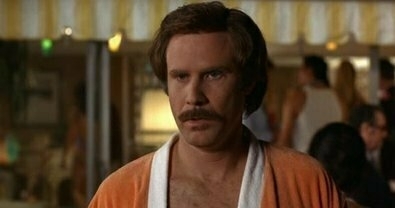
A screenshot from Anchorman: The Legend of Ron Burgundy during the opening party at Ron’s apartment

I’m very important. I have many leather-bound books and my apartment smells of rich mahogany.

Saturday was kind of a special day (as far as software development goes). I opened a pull request for Shenzhen. Shenzhen is a gem for building .ipa files from iOS projects (it even has support for distributing files to TestFlight, HockeyApp, FTP, and S3). While testing the gem, I noticed a few problems with building schemes in workspaces. I cloned the project to my local machine, played around with the source, until I fixed the issue. It was a small fix, but I had a few concerns.

Lizard Brain

I’m a very novice Ruby developer and I feared I was making an ass out of myself. I thought that my change might be considered hackie. Perhaps I was not conforming to Ruby standards. I’ve written Ruby code in the past, but I rarely let it see the light of day. There are always other, more preferred ways of an implementation (Ruby has methods for everything) and I’m always concerned that I’m doing something wrong or embarrassingly wrong.

I’m also pretty green when it comes to Github. Up until this point, I’ve only had a few pull requests accepted from Martin M on his Maven CXX Plugin (mainly changes to keep the plugin updated to building iOS projects). I’ve worked with Martin. He’s incredibly gifted and he was incredibly kind to accept my pull requests (especially since I know I did them poorly; Sorry Martin).

On top of that, the author of the project is mattt. Yes, that Mattt. Mattt with 3 T’s Mattt. NSHipster Mattt. (Side Note: I’m loving the NSHipster: Obscure Topics in Cocoa & Objective-C book.) With such an extremely knowledgable and talented developer, it felt daunting to be offering a change to his codebase.

Saturday morning, I decided it was time to stop being scared. I needed to learn how to do this properly. The best way to learn: By doing.

I Have the Power!!!

First, I found this awesome walkthrough on forking, working, and opening a pull request on Github: How to GitHub: Fork, Branch, Track, Squash and Pull Request. After about an hour of work, I had successfully opened a pull request. I was thrilled. However, my excitement was tempered a bit. I have heard many stories of pull request purgatory where the author never accepts pull requests and open ones just sit there for all eternity. So I was excited, but I realized that just opening a pull request was half the battle. I had done all I could do: Make the changes, document everything thoroughly in the commit log, open the pull request, and re-emphasize the changes I had made (and why) in the pull request description. Luckily, later that day, I received a Github notification: mattt had accepted my pull request. I was ecstatic. As I read through the full message, I noticed that he cherry picked my changes to avoid the addition to the .gitignore of ignoring BBEdit files (not a big deal, I probably should not have checked that change in anyway; Force of habit really).

I Learned Something Today

I think the moral of my story is this: Just do it (Nike™). In all seriousness though, my biggest enemy is always that nagging voice in my head, telling me that I shouldn’t bother. Or that I’ll fail. Or that people will regard my contribution as meaningless to the project. Or that I’m doing it wrong. I’m constantly fighting this. But as I do more, I’m slowly quieting that voice. I’m not sure if I’ll contribute more to open source projects on Github, but now that I have this under my belt, I’m going to feel more confident the next time the urge strikes me.